
3 Perspectives for Using Generative AI Responsibly
WANT TO SEE MORE LIKE THIS?
Sign up to receive an alert for our latest articles on design and stuff that makes you go "Hmmm?"
Glantz advocates for using generative AI responsibly by treating it as a muse for inspiration and a tool for rapid iteration, rather than an outright creator. The creative studio emphasizes that AI requires human expertise and discernment to be effective, as demonstrated by their experiments with tools like DALL-E 2 and Midjourney. Glantz leverages AI to test absurd ideas for a wider range of inspiration and to generate images for mood boards, ensuring human insight and empathy remain central to the creative process. This approach helps foster innovation without compromising human-centered design or creative quality.
Generative AI is like a campfire. Left unsupervised, it can fuel destruction. But with responsible attention, it can be useful and spark innovation (s’mores, anyone?).
Over the last few months, we’ve been stoking that campfire at Glantz. We’ve experimented with AI tools like ChatGPT and Mindjourney. Since their release, we’ve seen countless flaws that prove these tools cannot generate end-products like finished logos or blog posts. AI requires expertise and a human touch to be used effectively.
At Glantz, we want to foster a culture of harnessing this fire without letting the flames engulf our creativity or hinder our human-centered approach. We’re committed to delivering high-quality experiences that go beyond generative results. For that reason, we’re using AI as a stepping stone. AI is our muse, not an outright creator.
Testing Absurd Ideas for a Wider Range of Inspiration
When generative AI tools became widely available, we tested their potential with realistic and ridiculous prompts. Using DALL-E 2 and Midjourney, the best results came from absurd ideas like “HOKA shoes made out of slime” or “Brutalist Barbie mansion in the style of Wes Anderson.”
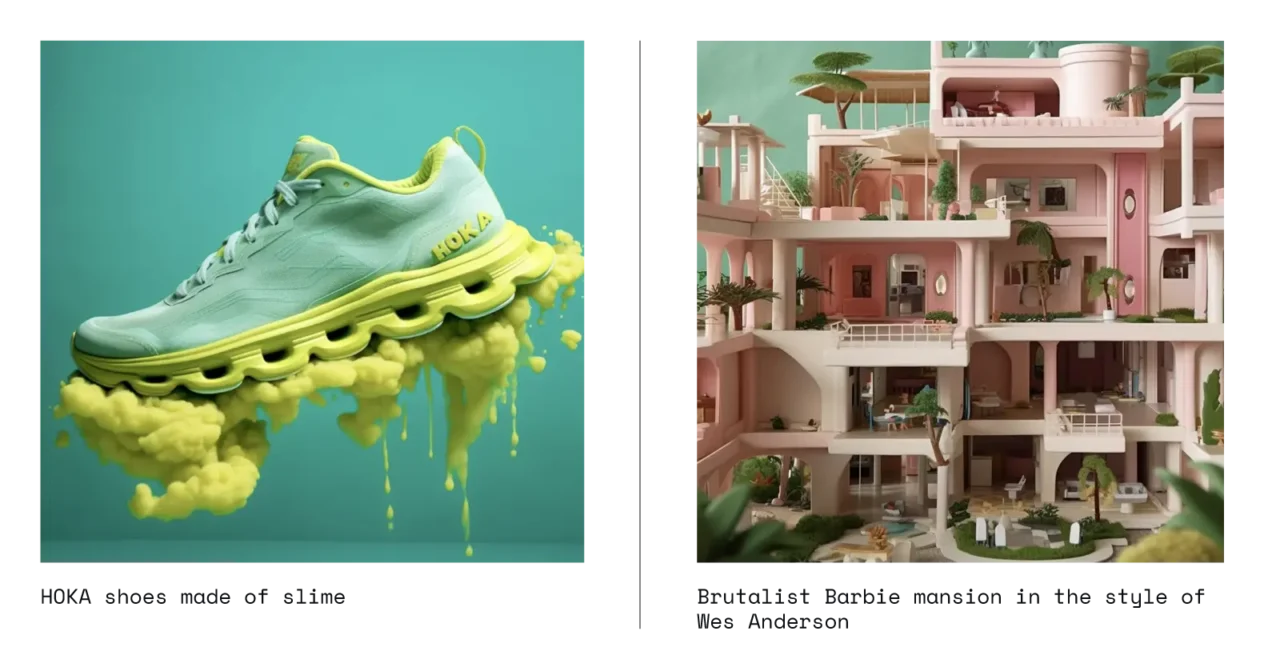
What the results lacked in practicality, they made up for in range of inspiration. For us designers, that inspiration can be anything: letterforms, textures, colors, shadows, etc. And these tools can generate a fusion of incredible ideas in seconds.
Interacting with AI tools is like turning to a knowledgeable but not-so-wise friend for help. You’d definitely want them there for trivia night, but may want a second opinion for anything else. This is why discernment and expertise are more important now than ever: With so much knowledge at our fingertips, we must be responsible with it.
Using AI Generated Images for Rapid Iteration
Once an AI tool generates results, people have to identify which elements are usable for inspiration. Take our branding work for a San Diego videography company that needed a new logo. For their rebrand, we identified key words and brand adjectives with their team. We then created AI prompts based on those key words. And using Midjourney, we generated images that contributed to our moodboards and expanded our range of iterations.
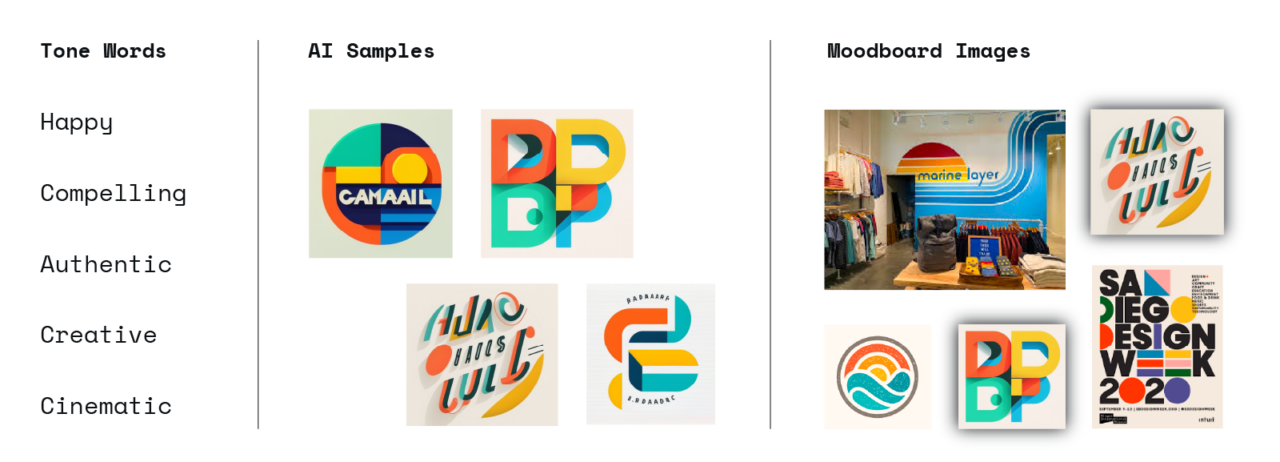
The Midjourney images contributed to our moodboards and expanded our concepts. However, the A.I. generated results were never able to stand on their own. To transform the inspiration into viable logos, we had to add insights about the studio’s customers. AI cannot generate or replace empathy.
Experimenting, Sharing Concerns, and Learning from Trial & Error
We also learned from speakers at Microsoft and Adobe in a workshop with Design Dept, a leader in learning and development for designers. During the session, we talked about the good intent of generative AI tools and the impact they might have on creative communities. We voiced our concerns about the importance of individual discernment while regulation catches up.
We then experimented with different tools, learned about licensing, and expanded our training based on the needs of our individual roles. We learned tips for creating better prompts and started to identify our own studio standards for using AI tools.
Three Perspectives on AI for a Better Creative Future
As the campfire burns, AI enthusiasts (ourselves included!) must strike a balance of rapid, yet responsible innovation. We need to act with greater foresight than we have in the past. In this evolving conversation, there are three distinct perspectives to honor:
- The “full-speed-ahead” tech enthusiasts. These are the ones creating the generative A.I. tools that are changing the way we work, communicate, and create. They are the forgers and lighters of the campfire, courageous or reckless enough to add more fuel. They consequently create wonders and, sometimes, messy calamities. For that reason, they must consider both the impact and intent of their actions.
- The “pump-the-breaks” reject. There’s no backtracking innovation. That’s why we need informed individuals who can help enthusiasts slow down and stabilize. By participating in community discourse, they help society innovate with foresight and accountability. They are the “Smokey the Bears” that can recognize the hazards of the flames when ambitions create blindspots.
- The curious skeptic. Arguably, this is where many of us fall. If you still see AI as a buzzword, you’re probably in this group. It’s important to stay up-to-date on how generative AI tools and their regulation evolve. And to be vocal when the tools are infringing on your humanity. Skeptics help keep the campfire under control and create wonders with the flames.
How does Glantz apply different AI perspectives in its creative work?
At Glantz, we find ourselves switching between these roles depending on the situation. As part of our core values, we’re constantly learning and challenging each other to be better. We celebrate innovation and grow from our mistakes by being sincere and direct. For that reason, it was important to align on our studio standard and build room for candid conversation.
Looking ahead, we will continue to leverage generative AI for inspiration and rapid iteration, but never for end-products unless specifically requested and licensed by our clients. We could not have come to this conclusion without our AI education and experimentation.