


Concert Posters: Timeless Marketing Lessons for Modern Businesses
WANT TO SEE MORE LIKE THIS?
Sign up to receive an alert for our latest articles on design and stuff that makes you go "Hmmm?"
Businesses can learn from the evolution of concert posters, which demonstrate the enduring value of thoughtful design and tangible assets in a digital world. Jules Cheret revolutionized poster design in the late 1880s by transforming it into an art form with impactful imagery and deliberate typography, moving beyond simple information dissemination. Similarly, the psychedelic posters of the 1960s, created by artists like Wes Wilson for promoters like Bill Graham, became iconic collectibles, proving that design can foster deep connection and memorability. Glantz suggests that by embracing design as an art and creating memorable brand assets, businesses can stand out and build stronger relationships with their audience.

As digital mediums seem to take the place of traditional printing, is there any value in keeping aspects of your business old school?
How has the evolution of concert posters provided business lessons?
The evolution of concert posters provides valuable business lessons by demonstrating the power of design and tangible assets. This section will explore the origin and historical development of concert posters, revealing how their changing forms offer insights into effective brand elevation and audience connection. For instance, a personal experience with a concert poster can evoke strong sentimental value, highlighting how well-designed, tangible items create lasting connections, much like a strong brand can with its audience.
As I came out of my nostalgic reverie, I started wondering about the origin of concert posters and how they’ve evolved over time. Time for a history lesson!
A brief history of concert posters
Concert posters were revolutionized in the late 1880s by Jules Cheret, also known as the father of the modern poster. Cheret turned poster design into an art form. Before Cheret, posters were simply a medium to quickly disseminate commercial information, then thrown away. Technological restraints made it difficult to print in color, so artists were reluctant to spend their time making posters that were also beautiful.
How did Jules Cheret revolutionize poster design?
Cheret recognized the impact that colors and deliberately designed typography could have on a posters’ success. He reduced the copy on his posters to allow for impactful imagery. This made the posters more eye-catching and allowed critical information to stand out. He used elaborate serif fonts for headers to make his posters appear more elegant. For the informative details, he often used more legible serif fonts.
Posters were then seen as not only an opportunity to spread information or to advertise, but also as a chance to design something remarkable. Artists began to imitate Cheret. You can see his influence on present-day concert posters and advertisements as well.
How did psychedelic rock influence concert poster design and value?
Flash forward to the late 1960s in San Francisco during the rise and height of psychedelic rock (consult your local baby boomer for more details about this glorious era) and you’ll find yourself in a sea of vibrant colors, abstract patterns, and vivid graphics (I’m talking about the posters people!).
Bill Graham, the concert promoter for the Fillmore Auditorium during this time period, needed to find a way to inform people about upcoming concerts and get them to actually show up. Graham commissioned artists like Wes Wilson, a pioneer of the psychedelic rock poster, to create eye-catching posters that matched the chaos and mind-altering quality of the music people were going to experience.
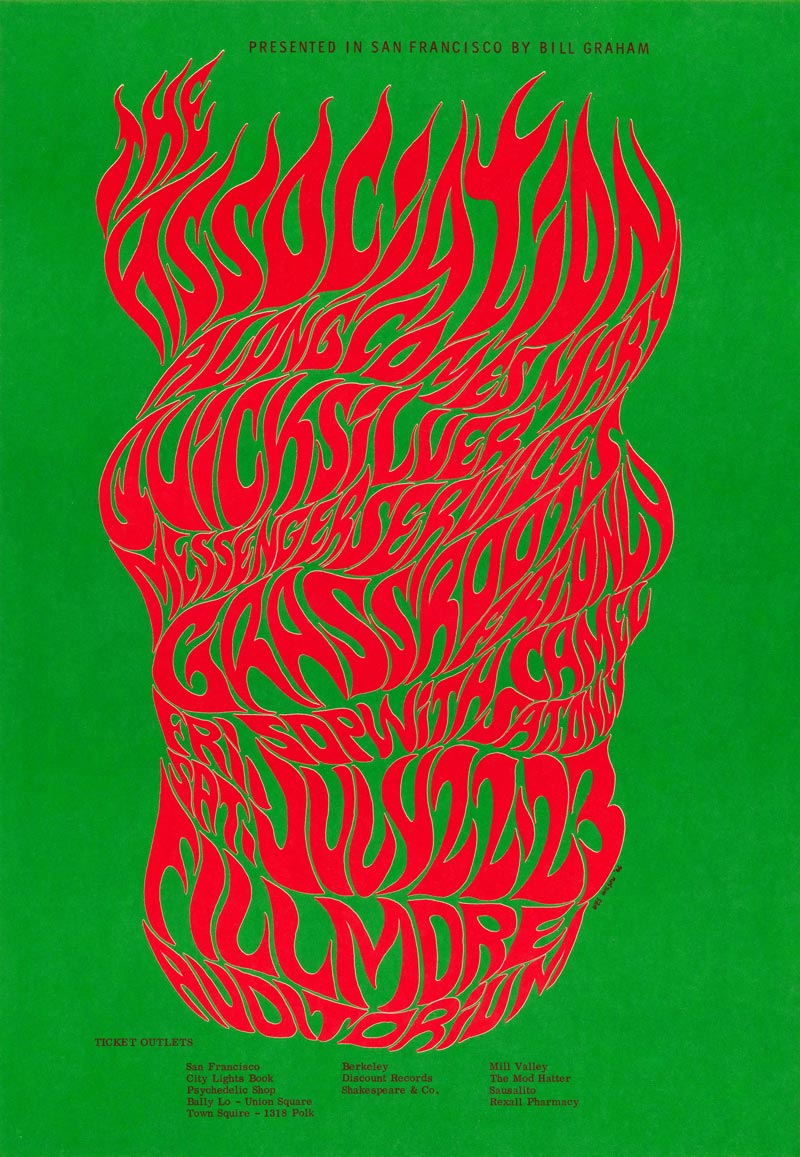
The Association Poster, Wilson (1966) 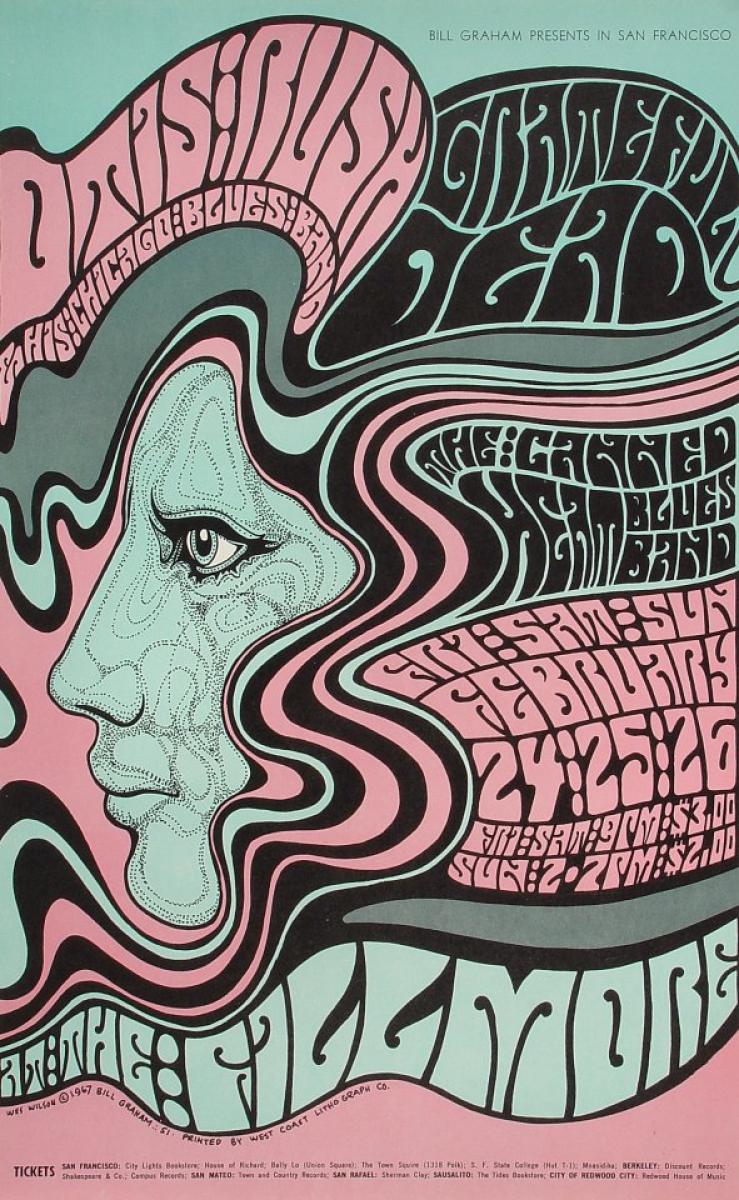
Greatful Dead Poster, Wilson (1967)
Although practically illegible from far away, the combinations of alluring colors and dramatic patterns force one to stop and read the informative bits. As these posters became more iconic, people started tearing them off of walls and keeping them as collectibles. Whether people wanted a tangible memory of their favorite band, or simply thought the posters looked cool enough for their living room, the concert poster had once again increased its value.
Posters in the Digital Age
It’s 2021, and for some of us young people, print is an outdated medium for advertising. We have our phones in our hands 24/7. We turn to Instagram for our news and updates rather than newspapers. I mean, I don’t even know how to work the office printer.
So, are concert posters and other print items a waste of time and money to make? No!
Digital media can be art. Depending on your target audience, it is often the best medium for promoting your business. But in my humble opinion, digital media doesn’t provide the tangible connection to your favorite band or brand that a printed or physical piece can. Concert posters might not be the reason why the majority of people are attending your event. However, they can be used to sustain a meaningful connection between an artist and fans (even during a global pandemic).
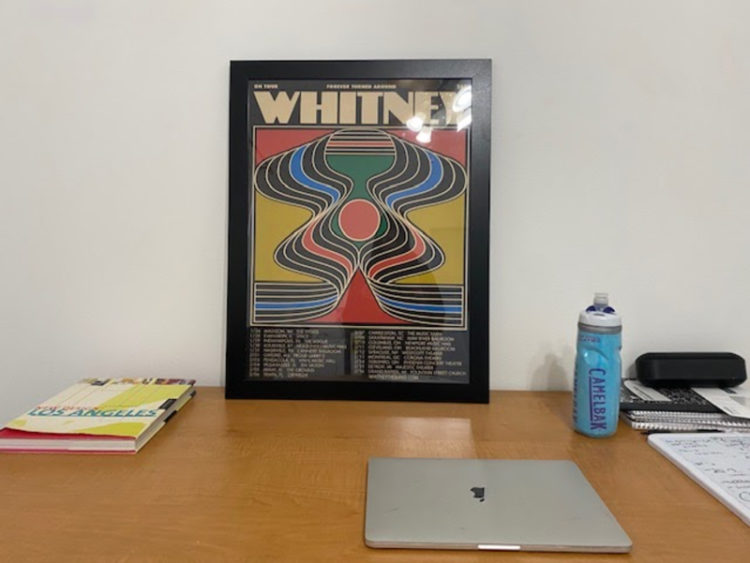
As the world changes, investing in ways to let your day one fans know how much you value them should not be completely forgotten—even if your business is undergoing a total brand revolution. Take some time to think about what compelled your first clients to choose you because that might be a worthwhile idea to hold on to.
Design and marketing practices will be evolving forever, but nostalgia and loyalty will always be a part of human nature.